For my vacation, I would love to visit Nara, Japan. Nara first stood out to me because it has the same name as me! (How cool is the name NARA J) As I was researching more deeply into it, I realized that Nara is a beautiful city. Although is it not as well known as Tokyo or Kyoto, Nara is a place filled with many historical/religious sites, and it preserves main scenes from the ancient times very well.
HOW WOULD I GET THERE?
To get to Nara from Pennsylvania, US, I will first get to John F. Kennedy International Airport in New York, and fly to Haneda Airport in Tokyo. The one way airfare would cost me around $1,500 to $2,000. At Tokyo, I would go visit some places, walk around, eat, and go shopping. From Tokyo, I would go to Kyoto via Shinkansen. Tokyo and Kyoto are connected with each other by the JR Tokaido Shinkansen. I could go to Nara straight from Tokyo via bus, but how can I not experience Shinkansen in Japan? I would ride Nozomi train that takes about 140 minutes to reach Kyoto from Tokyo. Nozomi train would cost me around 12,710 yen for non-reserved seat. From Kyoto, I would get on Miyakoji rapid train (kaisoku), which operates every 30 minutes between Kyoto Station and JR Nara Station. The one way trip takes 45 minutes and costs 690 yen. In total, it would cost me around $1657.41.
WHERE WOULD I STAY?
I would stay in Nara for four days and three nights in Guesthouse Naramachi Hostel. Guesthouse Naramachi was built in early 1900’s, and is a traditional merchant's home with authentic Japanese character. Guesthouse Naramachi is 1 minute walk from Kita-Kiyobate bus stop, 5 minute walk from JR Kyobate station, 15 minute walk from Kintetsu-Nara station, and Nara National Park is within the walking distance. Since this place provides bicycles for hire (about 300 yen) for long-range travel within Nara, I would probably explore Nara riding a bike. Guesthouse Naramachi costs around $37 per person per night.
WHERE WOULD I GO?
First, I would go to Nara Park, which includes most of Nara's sights, including temples, shrines, and deer. The deer are thought to be messengers of gods in Nara according to the legendary history of Kasuga Shrine. The mythological god, Takemikazuchi, arrived at Nara on a white deer to guard the newly built capital of Heijō-kyō. Since then the deer have been regarded as heavenly animals, protecting the city and the country.
1) Within Nara Park, I want to visit Tōdai-ji, the eastern great temple. Todaiji was constructed in 752 as the head temple of all provincial Buddhist temples of Japan. When Nara was the capital of Japan, Todaiji temple grew so powerful that the Japanese capital was moved to Nagaoka in 784 in order to lower its influence on government affairs. Todai-ji temple is the place where Daibutsu, the largest Buddha statue (550 short tons) in Japan is located. Daibutsu is inside the Daibutsuden (great Buddha hall), which is the largest wooden building in the world and it is a UNESCO World Heritage Site. I am especially interested to visit Todaiji due to Daibutsuden’s rear support pillars, which have holes through the bottom. The holes are considered the “healing pillars,” and it is told that anyone who successfully squeezes through one of these holes are guaranteed to go to heaven. Visiting Todaiji would cost me about 500 yen.
1) Within Nara Park, I want to visit Tōdai-ji, the eastern great temple. Todaiji was constructed in 752 as the head temple of all provincial Buddhist temples of Japan. When Nara was the capital of Japan, Todaiji temple grew so powerful that the Japanese capital was moved to Nagaoka in 784 in order to lower its influence on government affairs. Todai-ji temple is the place where Daibutsu, the largest Buddha statue (550 short tons) in Japan is located. Daibutsu is inside the Daibutsuden (great Buddha hall), which is the largest wooden building in the world and it is a UNESCO World Heritage Site. I am especially interested to visit Todaiji due to Daibutsuden’s rear support pillars, which have holes through the bottom. The holes are considered the “healing pillars,” and it is told that anyone who successfully squeezes through one of these holes are guaranteed to go to heaven. Visiting Todaiji would cost me about 500 yen.


2) Nara National Museum contains major works of art from the Nara period. The museum displays sculpture, paintings, and calligraphy. It also includes artworks and archaeological artifacts related to Buddhist art. The museum also holds exhibitions to share the culture and the background history of Buddhist art throughout the day. Out of all the facilities within the Museum, the Nara Buddhist Sculpture Hall is where the Masterpieces of Buddhist sculptures are held. A large number of great sculptures from the Asuka period through the Kamakura period are on display. Some Buddhist sculptures from China and Korea are also displayed here. I am very interested in art, especially ones that are related to different religions. Therefore, exploring the Nara Buddhist Sculpture Hall will be an awesome opportunity for me to learn more about different art styles of Japan! The museum hours are from 9:30 am to 5:00 pm, and the admission fee is 500 yen for general admission, and 250 yen for college students (Yatta!)

3) Manyo Botanical Garden is located next to the Kasuga Shrine at 160 Kasugano-cho in Nara. The garden opened in 1932, and it contains over 300 species of plants that are referred in the Manyo-shu ancient collection of poems. Every plant in the garden is labeled with its name and the poems in the Manyoshu that mention it. This place also contains a Wisteria Garden, Camellia Garden, Iris Garden, and a Five Grain Garden that contains grains plants that are used for textiles and food in Manyoshu times.

Wisteria (きれいですね)
4) Kasuga Shrine is the shrine of Fujiwara family. For purity, the Shrine was torn down and rebuilt every 20 years. This place is filled with bronze lanterns that people donate in thankfulness. During the festivals of Setsubun Mantoro (February 2–4) and Obon Mantoro (August 14–15), the thousands of shrine lanterns are all lit at once. I would probably set my vacation date around August so that I could be part of this festival J. Also, the shrine is known for wisteria flowers that are symbolic to Fujiwara family because "Fujiwara" can be read as "field of wisteria." The buildings of Kasuga Shrine are characteristic examples of the Kasuga-zukuri style of building shrines (red painting of the beams and white plank walls). Here, I would pay 200 yen for an onikuji, a slip of paper on which my fortune will be written in English. It is really interesting that you can get rid of the fortune by tying a piece of paper to the twig of a tree if the fortune is bad (Hopefully, this won’t happen to me). The hours of Kasuga Shrine are from 9am-4:30pm daily, and it is a free admission to grounds. The inner grounds cost 420 yen.

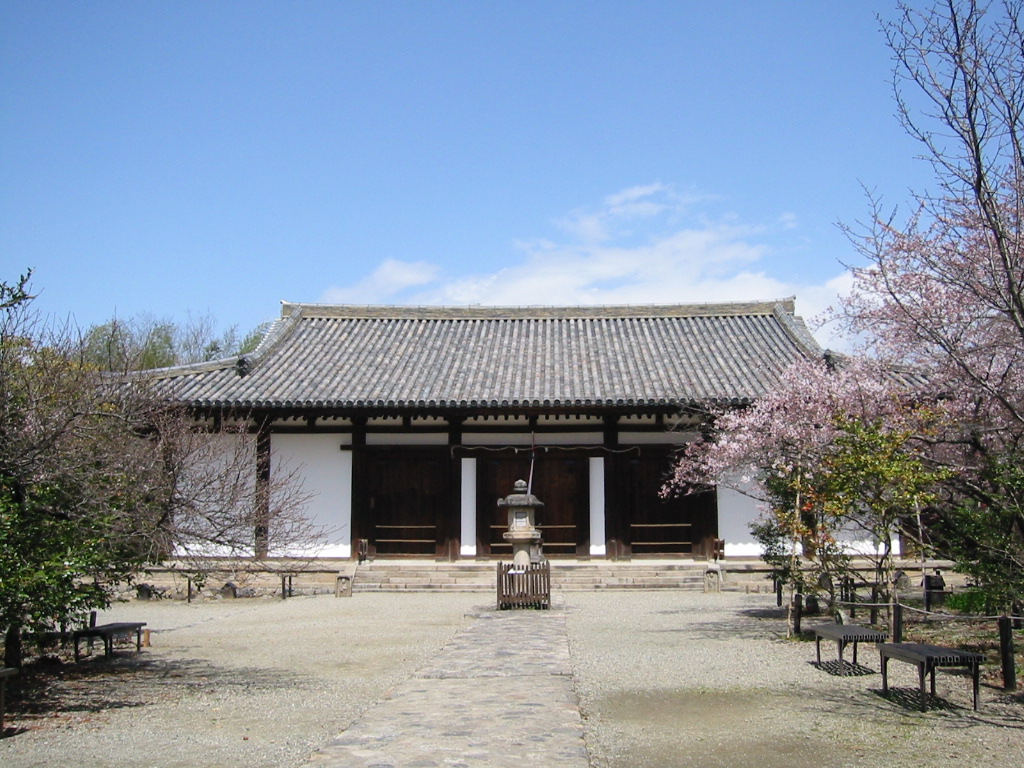
5) LAST BUT NOT LEAST… Shin- Yakushi- ji!!! (I would have to visit this place since Mizenko Sensei recommended very strongly!) Shin-Yakushi-ji is a Buddhist temple founded in 747 by Empress Kōmyō. The temple suffered from fire damage and deteriorated during the Heian period, but it was rebuilt in the Kamakura period. I would like to see The South Gate, which is the oldest extant example of a four-legged gate. Inside the main hall, or Hon-do, there are life size statues of 12 guardian deities surrounding Yakushi, the Healing Buddha, which is the temple’s main object of worship. The Yakushi statue is made of wood while the guardians are made out of clay. Each guardian has a different character with different poses, and possesses a different weapon. I cannot wait until I visit this place!

This will be the end of my journey in Nara, Japan!! <3

I like that you included pictures for each place/thing. The Kasuga shrine looks pretty impressive with the bright coloring, would definitely be worth seeing. The botanical garden looks like a great place to take some pictures, and sounds like it would be a nice, relaxing experience in a scenic and serene environment. I think it's cool that it's right next to the Kasuga shrine.
ReplyDeleteWhy are you copying Cynthia, come on!
ReplyDeleteIn all seriousness, I like the photos that you included with each place that you would like to visit. I would say I would like to visit these temples, but since this is the last blog I am commenting on I think I would have probably visited enough temples to be happy for a while. I would like to visit the Botanical Garden to see how it compares to the botanical garden in NY. I think it probably has a lot of flowers I have never seen before, so it would be interesting to see which flowers are unique to Japan.
We can go together!!! You're trip is going to cost a tad bit more obviously though...Meet you in Tokyo so we can hang out with Michelle!
ReplyDeleteIt's good that you're willing to visit these cool, spiritual places. I'm a sucker for art and religion in general is interesting to me too so these temples look super cool to me. Maybe I should have put Shin-Yakushi-ji to be on Mizenko-sensei's good side too but I had already done my blog post and was too lazy to go back to edit... But it sounds so interesting so I think I'll want to visit that place too!
Yes, come hang out in Tokyo with me!!! :D
ReplyDeleteLike Mike said, I really like that you included photos in your blog post. I think you are the only person to have done that! The temples and shrines that you want to visit look really beautiful- i'm sure the photos dont even do them justice! Also, the art museum sounds really cool. I also like art, and the art in Nara must have a lot of historical significance and must be really beautiful!