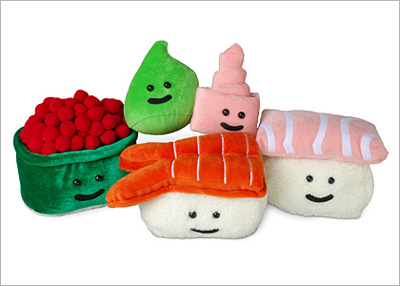
For my last project, I have decided to explore and research on the Japanese food that everyone loves… SUSHI!!! I mean really, everyone loves sushi, and sushi is the one of the most famous Japanese dishes outside of Japan! Besides just eating and enjoying it, I thought it would be very interesting for me to embrace and learn more about the history of sushi. During the Edo period, sushi (すし) was referred as a pickled fish conserved in vinegar. Nowadays, sushi is defined as different kinds of “neta” on top of cooked, vinegared rice. Neta are different toppings or ingredients that are served on top of the rice, such as sliced raw fish and shrimp.
The history of sushi is very intriguing. Although sushi is most commonly linked to the Japanese heritage, it actually began in China during the 7th Century. The traditional form of sushi was fermented fish and rice, because this was the only way to preserve the fish. Raw fish was cleaned and coated with a lot of salt, and were usually pressed down with some type of stone. The fish had to stay in the salt layers for a couple of months in order for the fermentation process to complete. The archaic definition of sushi literally translates into “sour-tasting,” which relates to the process of fermenting the fish. However unlike the modern form of sushi, the fermented fish was eaten by itself, and the rice was tossed out. But this tradition did not last long. Due to drought and a food shortage, people began to consume the rice as well as the fish, which began the advancement of contemporary sushi.
The modern version of sushi was first created by a famous chef, Hanaya Yohei, in the 1800s while he was cooking at a large dinner party. At the dinner, Yohei found out that he did not have enough fermented fish to serve his guests. Therefore, he took a piece of fish from the freezer that had not been fermented and decided to serve it. After preparing a successful dinner, he later realized that frozen fish actually retains their flavor, and any bacteria are killed. From this discovery, Yohei created two styles of Sushi. One of the styles is called the Edomaezushi because it uses freshly caught fish from the edo-mae (edo bay).The second one is called Osaka, named after the city.
This discovery of sushi is very interesting and eye-opening. I cannot believe this delicious food was created by chance. I would also have never known that sushi first originated in China if I did not research on this topic. This masterpiece created by chance is now a multi-billion dollar industry. Since 1970, more than 5,000 Sushi restaurants opened in America. The popularity and the love for Sushi continue to rise in the people all around the world.
According to the Millennium Edition of the Guiness Word Records, two Sushi records exist. The first one happened in January of 1992 in which a 715-pound fin tuna was sold for more than $83,000. This tuna was then used to create 2,400 servings of Sushi at $75 per serving. The second record is on the creation of the world’s longest Sushi roll. It took more than 600 people to create a 3,279-foot cucumber roll in October of 1997.
There are many different kinds of sushi for people who have different tastes and preferences. Some of the popular ones are listed below:
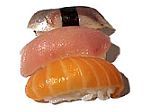
Nigirizushi: Small rice balls with fish, shellfish, fried egg, etc. on top. There are usually some wasabi in between the neta and the rice.
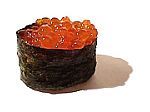
Gunkanzushi: Small cups made of rice and dried seaweed filled with seafood. Some of the most common gunkanzushi are sea urchin and various kinds of fish eggs (my favorite!)
Norimakizushi: Sushi rice and usually seafood rolled in seaweed sheets. Sushi rolls also can be prepared "inside out," with rice on the outside, and neta and seaweed in the inside.
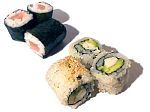
Temakizushi: Cones made of seaweed filled with sushi rice, seafood, and vegetables.
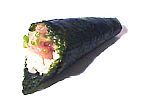
Inarizushi: Sushi rice is filled into deep fried tofu bags. This type of sushi is very inexpensive.
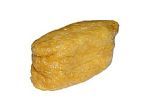
Chirashi: A dish in which seafood, mushroom and vegetables are spread over sushi rice.
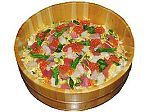
Western-style sushi: The increasing popularity of sushi around the world resulted in variations of sushi that are rare in Japan. The first western-style sushi was the California roll. Some other kinds of sushi include
Alaska roll: variant of California roll with raw salmon in the inside.
B.C. roll: Containing grilled or barbecued salmon skin, cucumber, and sweet sauce.
Philadelphia roll: Consisting of raw or smoked salmon, cream cheese, cucmber or avocado.
Spider roll: Made with fried soft shell crab, cucumber, avocado, and spicy mayonnaise sauce.

Last but not least, Oshizushi: A pressed sushi made using a wooden mold, called anoshibako. The bottom of the oshibako is filled with toppings with sushi rice on top of it, and then presses the lid of the mold down to create a compact block. The block is removed from the mold and then cut into bite-sized pieces.

Oshizushi is from the Kensai region, a favorite and specialty of Osaka. Oshizushi was first created when the modern sushi first came about. The merchants in Osaka blended rice with other ingredients to form packages for people to eat. By the mid 18th century, Oshizushi reached Edo, now known as Tokyo. When I go to Japan, I am definitely going to try all the different sushi I listed above. I will go to different restaurants like the Ginza Kyuubei in Tokyo that costs about 8,000 yen for lunch, and Sukiyabashi Jiro, which is also located in Tokyo that costs about 15,000 yen. Also, I have to go to Osaka to try the original oshizushi!
I also want to go eat at a conveyor-belt sushi restaurant because I have never experienced this kind of restaurant before, and I think I will get to try a lot of different sushi at a conveyor-belt than at a regular restaurant at a reasonable price. The conveyor belt sushi was first invented by Yoshiaki Shiraishi (1914–2001), who had problems managing his small sushi restaurant by himself. He got the idea of a conveyor belt sushi after watching beer bottles on a conveyor belt in an Asahi brewery. After five years of development and preparation, Shiraishi opened the first conveyor belt sushi restaurant, Mawaru Genroku Sushi, in Osaka in 1958, eventually expanding to up to 250 restaurants all over Japan. However, by 2001, his company had just 11 restaurants.


The most fascinating fact about conveyor belt sushi is that plates of sushi are travelling all around the restaurant, and you can eat whatever and whenever you want! These fishes are usually very fresh and cheap due to large amount of fish that the restaurants order. It is also interesting that the bill is calculated by counting the number and type of plates of the consumed sushi. Plates with different colors or shapes have different prices, usually ranging from 100 yen to 500 yen. Some conveyor belt sushi restaurant chains, such as Kappa Sushi, have a fixed price of 100 yen for every plate. When I visit Japan, I would probably eat at Kappa Sushi (356 restaurants), Sushiro (267 restaurants), or Kura Sushi (247 places), which are franchises that offer fixed price of 100 yen for any sushi plate.
Since I am on the topic of sushi, I would also like to visit different fish markets, especially Tsukiji, to see different fishes that are used as the sushi ingredients. I would also like to see how fresh and how inexpensive the fishes are. The Tokyo Metropolitan Central Whole sale Market, also known as the Tsukiji Market, is the biggest wholesale fish and seafood market in the world. The market is located in Tsukiji in central Tokyo. The Tsukiji market handles more than 400 different types of seafood, including whales.
The market opens in the morning at 3:00 am usually, with the arrival of the products by ship, truck and planes from all over the world. The auction houses, the wholesalers known as oroshi gyosha, then estimate the value of the fishes and sell it out as an auction. The auctions start around 5:20 am, and bidding can only be done by licensed participants, who are usually restaurant owners or food processing companies. The market handles more than 2000 metric tons of seafood per day, with a total value of more than 600 billion yen per year.
Sushi is loved by everyone not only because of its flavor, but also because it is very healthy for our diet. There are many types of fish that you can find in a sushi restaurant that contain great concentrations of nutrients. Omega-3-rich fish such as salmon and tuna are very popular everywhere. Fish has little to no cholesterol, and they do not contain any unhealthy fats. Fish contains a lot of antioxidants, vitamins, and minerals. It especially contains a lot of vitamin E, which reduces the risk of cardiovascular disease and lowers the cholesterol level. The other components of sushi also contain different nutrients that are needed in our body. Rice is a natural source of zinc that boosts our immune system. The seeweed, that is used to wrap the sushi, contain many valuable sea minerals and antioxidants. Of course, there are exceptions to these positive impacts of sushi in our body. Pregnant women should not consume sushi because raw fishes play a negative role in infants. For some people, sushi might just not be a right fit for their diet. Despite the exceptions, all types of sushi can be healthy, especially the ones made with vegetables.
Sushi is not only an influential food in Japan, but also famous all around the world. Sushi is tasty and healthy. Sushi is one of the most effective ways to experience the Japanese culture and learn more about its tradition. I cannot wait until I fly over to Japan and try every different kinds of sushi that I can afford J My love for sushi grew even more after researching on this topic. I hope everyone gets to learn more about sushi through my blog, and I hope everyone’s love for sushi gets greater and greater after reading this post!!~